
The sole convict in the 26/11 Mumbai terror attack case, Mohammad Ajmal Amir Kasab, on Tuesday contended before the Supreme Court that he was not given a free and fair trial in the case. Senior advocate Raju Ramachandran, who has been appointed as amicus curiae by the apex court to defend Kasab, told a bench headed by Justice Aftab Alam that he was not a part of the larger conspiracy for waging war against the nation.
Mohammad Ajmal Amir Iman Kasab, the lone terrorist arrested during the November 26 terror attacks in Mumbai, on Tuesday once again asked for consular access and legal aid from Pakistan, a top police official said.He sought legal aid for the second time and has been informed that his letter requesting consular access earlier has been handed over to the Pakistan High Commission.Kasab was, earlier in the day, remanded to further police custody till January 19.

The Lashkar-e-Tayiba, expert Stephen Tankel believes, is capable of operating on a large scale and some of its operatives have suggested that the organisation benefited in terms of recruitment following the 26/11 attacks in Mumbai.
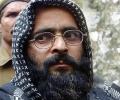
The Delhi High Court dismissed a plea seeking the removal of the graves of terrorists Mohammad Afzal Guru and Mohammad Maqbool Bhatt from Tihar Jail, citing the absence of any law prohibiting burial inside jail premises and the government's decision to maintain law and order.
The Bombay High Court has issued a notification directing the immediate constitution of a special court in the Arthur Road jail premises in Mumbai, to conduct the trial against Mohammad Ajmal Amir Kasab, the lone arrested terrorist in the November 26 terror attacks.The Mumbai Crime Branch is likely to file its chargesheet in the case on February 24, sources said.Special public prosecutor Ujwal Nikam and Rakesh Maria, gave final touches to the chargesheet.

"I remember the evil grin on Kasab's face. Armed with an assault rifle, he was walking towards the suburban platform," he said.
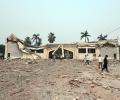
A total of nine terror sites in Pakistan, including five in Pojk, linked to Lashkar-e-Taiba (Let) and Jaish-e-Mohammed (Jem), were targeted with meticulous planning to avoid civilian casualties.
Zabiuddin Ansari alias Abu Jundal has been spilling the beans about how the entire 26/11 operation was executed from Karachi with the blessings of Lashkar-e-Tayiba founder Hafiz Mohammad Saeed. Rediff.com's Vicky Nanjappa gives details of his ongoing interrogation
Two days before the Hyderabad blasts, the Centre had alerted all states that Pakistan-based terrorist groups may carry out attacks in a major city to avenge the hanging of Ajmal Kasab and Afzal Guru.
Lashkar founder Mohammad Sayeed and 26/11 attacks accused Zaki-ur Rehman Lakhvi must be neutralised one by one if Pakistan does not act against them, says Brigadier Gurmeet Kanwal (retd).
If the home minister knows anything unlawful about the RSS or the BJP, who has stopped him from taking the sternest action? But to blame nationalist forces without any proof is a sin against the very idea of India, says BJP MP Tarun Vijay.
The chargesheet in the November 26, 2008, Mumbai terror strikes, which claimed over 180 lives, is likely to be filed today. The charge-sheet will be filed before a metropolitan magistrate, who will then transfer the case to the special court constituted inside the high-security Arthur Road jail.
After National Security Adviser Mahmud Ali Durrani, it was the turn of the Special Public Prosecutor in the Mumbai attacks case to be sacked by the Pakistan government for making controversial remarks on the lone captured terrorist Ajmal Kasab.
Fahim Ansari and Mohammad Sabahuddin Ahmed might have been let off by the Mumbai special court in the 26/11 terrorist attacks case on India's commercial capital, but they were clearly not off the hook in Uttar Pradesh, where cops were all set to nail them in an earlier attack on a Central Reserve Police Force camp in Rampur city, about 300 km from Lucknow.

Riaz Akhtari and Ghouse Mohammad had fled after brutally hacking tailor Kanhaiya Lal to death in Udaipur on June 28.

Over 100 terrorists, including high-value targets such as Yusuf Azhar, Abdul Malik Rauf and Mudasir Ahmed, were eliminated during Operation Sindoor on May 7, the Indian military said on Sunday.
He is the sole surviving terrorist of the terror attack on Mumbai, but one glance at him and you might assume that Ajmal Mohammad Aamir Kasab is merely a school-going boy, not a terrorist who shot scores of innocent people on November 26 last year.This is the first time that the media got a glimpse of Kasab, 21, at the specially constructed court in the high-security Arthur Road Jail on Wednesday.Kasab, 21, is barely five feet tall and sports a thin beard and moustache.
Several criminal lawyers in Mumbai have refused to take up the case of Mohammad Ajmal Amin Iman alias Kasab, the sole man arrested in connection with last week's terrorist carnage here, citing ethical constraints.A resolution was passed unanimously by the Bombay Metropolitan Magistrate Court's Bar Association, which has more than 1,000 members, saying that none of its members will defend any of the accused of the terror attacks.Kasab was arrested on November 26.
Pakistan on Friday said it has so far not requested consular access to Ajmal Amir Kasab, the lone terrorist captured during the Mumbai terror attacks, as India has not provided any evidence on his identity and nationality. Consular access is usually sought once the identity and nationality of an accused are established, Foreign Office spokesman Mohammad Sadiq told Pakistan's Dawn News channel.
Evidence in 26/11 Mumbai terror attack case involving Mohammad Ajmal Amir Kasab and nine slain terrorists clearly showed it to be a "pre-meditated" assault on the country's commercial capital by Pakistani terrorists, guided by their handlers from across the border, the Supreme Court was told on Thursday.
Can the claims by the Mumbai police that just 10 terrorists managed to hold Mumbai hostage for three days be believed? The sequence of events, observations by top security experts, the Intelligence Bureau and also the confessions of the arrested militant now in the custody of the Mumbai police, indicate that the operation was carried out by more than 10 men.
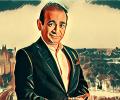
The central government has already conducted an assessment of security cover given to prisoners in the Arthur Road Jail and its findings conveyed to the UK court.
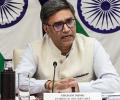
The United States has approved the extradition of Tahawwur Rana, accused of involvement in the 2008 Mumbai terror attacks, to India. The decision was announced by President Donald Trump during a joint press conference with Prime Minister Narendra Modi in the White House. India is currently working on the logistics of Rana's surrender and extradition, with several final steps to be completed before he is sent back to India. The joint statement issued by India and the US during Prime Minister Modi's visit reaffirmed their commitment to fighting terrorism and eliminating terrorist safe havens. The leaders also called on Pakistan to bring to justice the perpetrators of the 26/11 Mumbai and Pathankot attacks. Rana, a Canadian national of Pakistani origin, is currently lodged at a metropolitan detention center in Los Angeles. He is associated with Pakistani-American terrorist David Coleman Headley, one of the main conspirators of the 26/11 attacks.
Two crucial witnesses in the Mumbai attacks trial, including an electoral officer who gave evidence about the Pakistani origin of one of the Laskar-e-Tayiba terrorists involved in the assault on India's financial hub, have been cross-examined in an anti-terrorism court.
Two crucial witnesses in the Mumbai attacks trial, including an electoral officer who established the Pakistani origin of one of the Lashkar-e-Tayiba terrorists involved in the assault on India's financial hub, have been cross-examined in an anti-terrorism court.

Sharif questioned the stalled trial in the gruesome attack.
Sardar Mohammad Ghazi, dismissed for making controversial remarks on Kasab, said there were no differences of opinion when he had told senior government officials that Pakistan would have to seek the extradition of Kasab, the "prime suspect" in the Mumbai attacks case.
Pakistan President Asif Ali Zardari on Friday fired the special public prosecutor in the Mumbai terror attack case, more than a week after the senior lawyer sparked a controversy claiming that Islamabad had formally requested India to hand over Ajmal Amir Kasab, the lone terrorist arrested during the three-day terror siege..

Syed Firdaus Ashraf/Rediff.com presents the names of 10 global terrorists who, according to United Nations Security Council, are operating against India from Pakistan.

The case is being tried in the Anti-Terrorism Court since 2009. There has hardly been any case in any ATC in Pakistan that is pending for over nine years.

India questioned the functioning of Pakistan's notorious military courts.

'Mohammad Akhlaq's death isn't only about a Muslim being killed out of sheer communal bigotry, but also the denial of the Constitutional guarantees of "due process" under Article 21 and the freedom of choice,' says Shehzad Poonawalla, who has moved the National Commission for Minorities over the murder.

'This is not the handiwork of ordinary sub inspectors and constables.' 'If the police claim there was a scuffle between them and these five men, then how come none of the policemen were killed, or even hit by a bullet?'
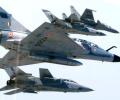
'We could quibble with each other whether there were 25 terrorists killed or 250 killed.' 'The message is more that India undertook such an aerial attack and this attack has actually changed the paradigm.' 'The change in paradigm is that India has shown by the surgical strike in 2016 and the aerial strike of 2019 that we will not just sit back and tolerate terrorism which killed so many of our people.' 'We will hit back and by hitting back we will raise the costs of such activities.'
